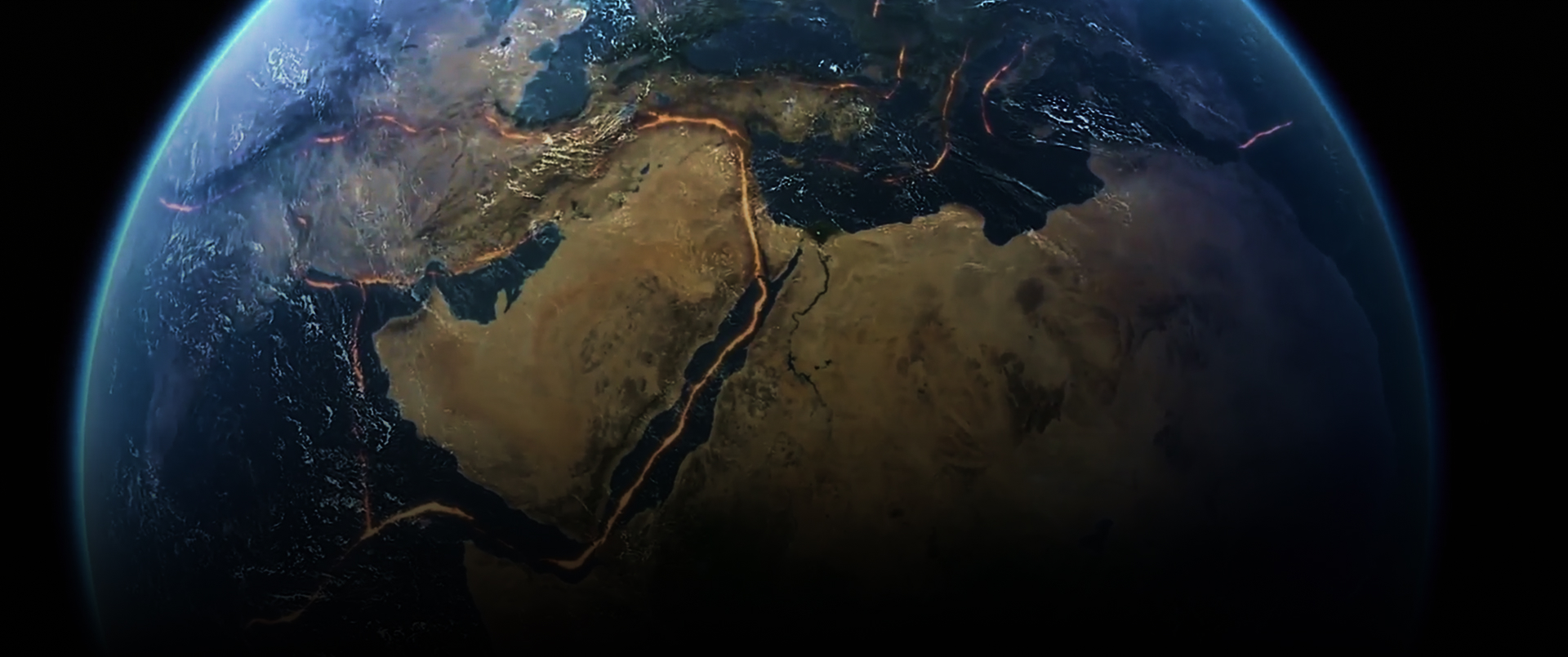
In recent years, the scientific community’s interest in predicting earthquakes (EQs) over the short term has surged.
This surge is linked to possible Lithosphere-Atmosphere-Ionosphere coupling (LAIC), which refers to the complex interactions and exchanges of energy and matter between the Earth’s solid crust (lithosphere), the gaseous envelope surrounding the Earth (atmosphere), and the upper part of the atmosphere ionized by the solar radiation (ionosphere). As a result, numerous theories have been put forward to elucidate the interactions among the Earth’s crust, the atmosphere, and the ionosphere.
The initial theory posited that radon emissions near the earthquake’s epicenter (EE) could disrupt atmospheric conductivity. This disruption might lead to alterations in the atmospheric electric field, which would, in turn, modify the ionospheric plasma density profile.
Another theory proposed that electrostatic effects originating in the Earth’s crust could permeate the lower atmosphere, influencing the ionization state of the ionosphere. In 2020, the Limadou Collaboration developed an analytical LAIC model tested using CSES-01 satellite data together with other space-based and ground-based data and tools.
The Magnetosphere-Ionosphere-Lithosphere Coupling (MILC) model, is based on a series of analytic equations, starting from the boundary conditions of the earthquake fault and predicting the characteristics of the disturbances which are observable at the satellite altitude.
The model has been successful both at describing the signals expected at satellite level for earthquakes of magnitude larger than 5 and at explaining why, in certain cases, the atmospheric wave perturbation (Acoustic Gravity Wave – AGW) injected by the earthquake, is not able to detach from ground and propagate through the atmosphere up to the ionosphere.
The research on earthquake precursors is set to progress rapidly with the CSES satellite constellation, thanks to its extended data acquisition period. CSES-01 data have already made an important step ahead in collecting statistics. The second CSES-02 mission will extend the data taking period.
This will enable the collection of a large statistical dataset of ionospheric variations correlated with seismic activity, further enhancing predictive capabilities.
Artistic impression of a volcanic eruption
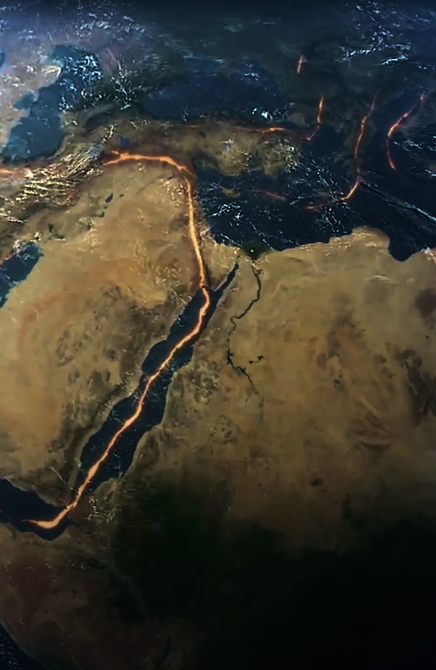
The study of earthquakes from space is an intriguing field that utilizes cutting-edge technology to...
Read more
The near-Earth environment (NEE) is a dynamic region influenced by space weather, which includes solar...
Read more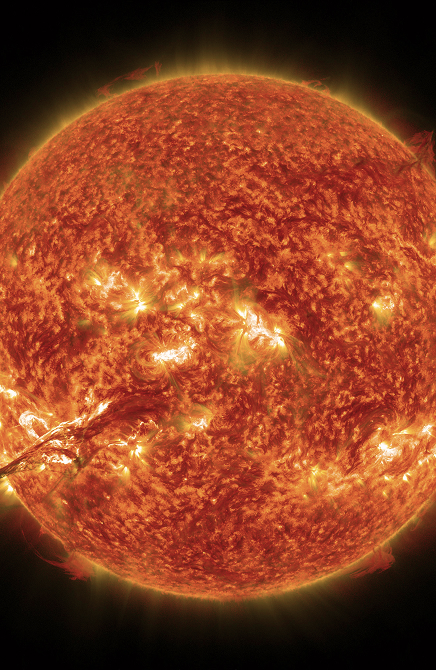
Space Weather refers to the environmental conditions in space as influenced by the Sun and...
Read more
Over the polar regions along the CSES-02 orbit, the particle instruments onboard will detect low-energy...
Read more